Data-driven road intelligence: Redefining safety and asset management in urban and rural networks recap
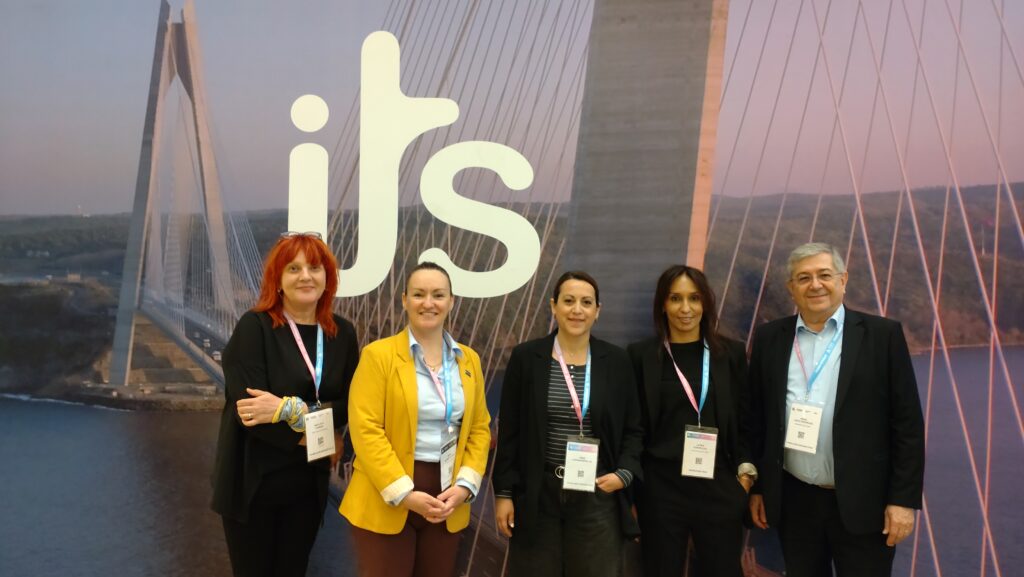
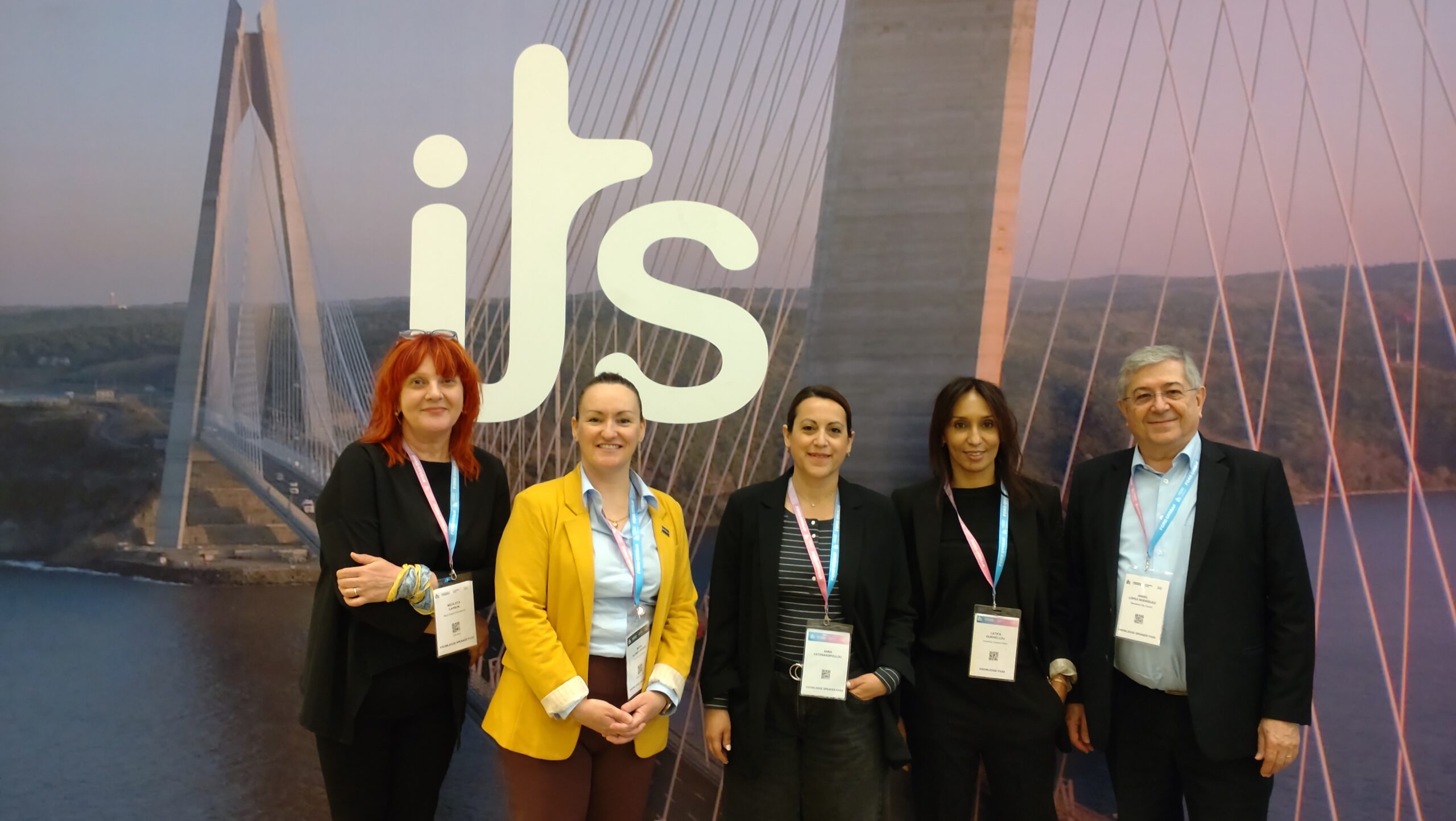
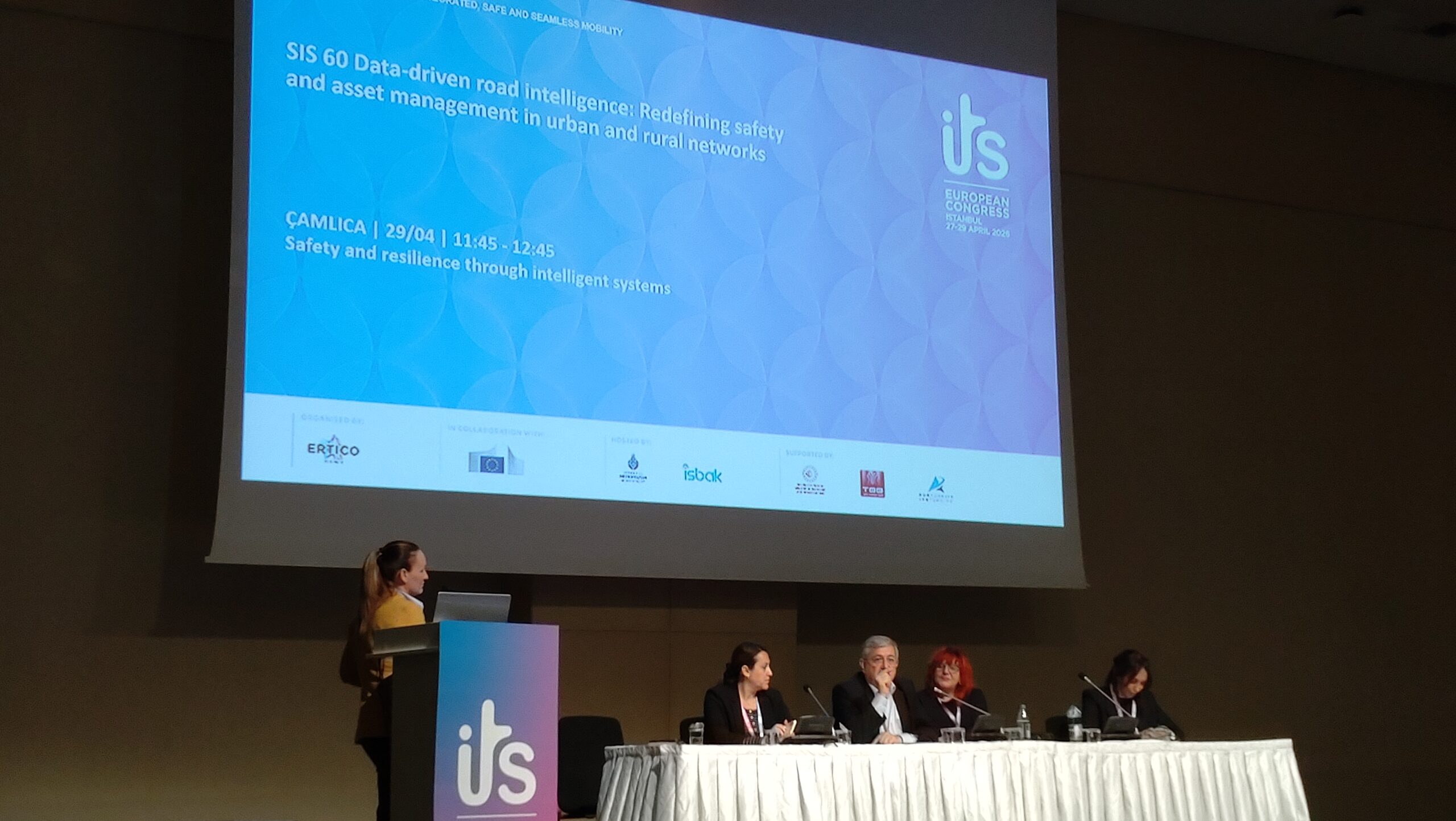
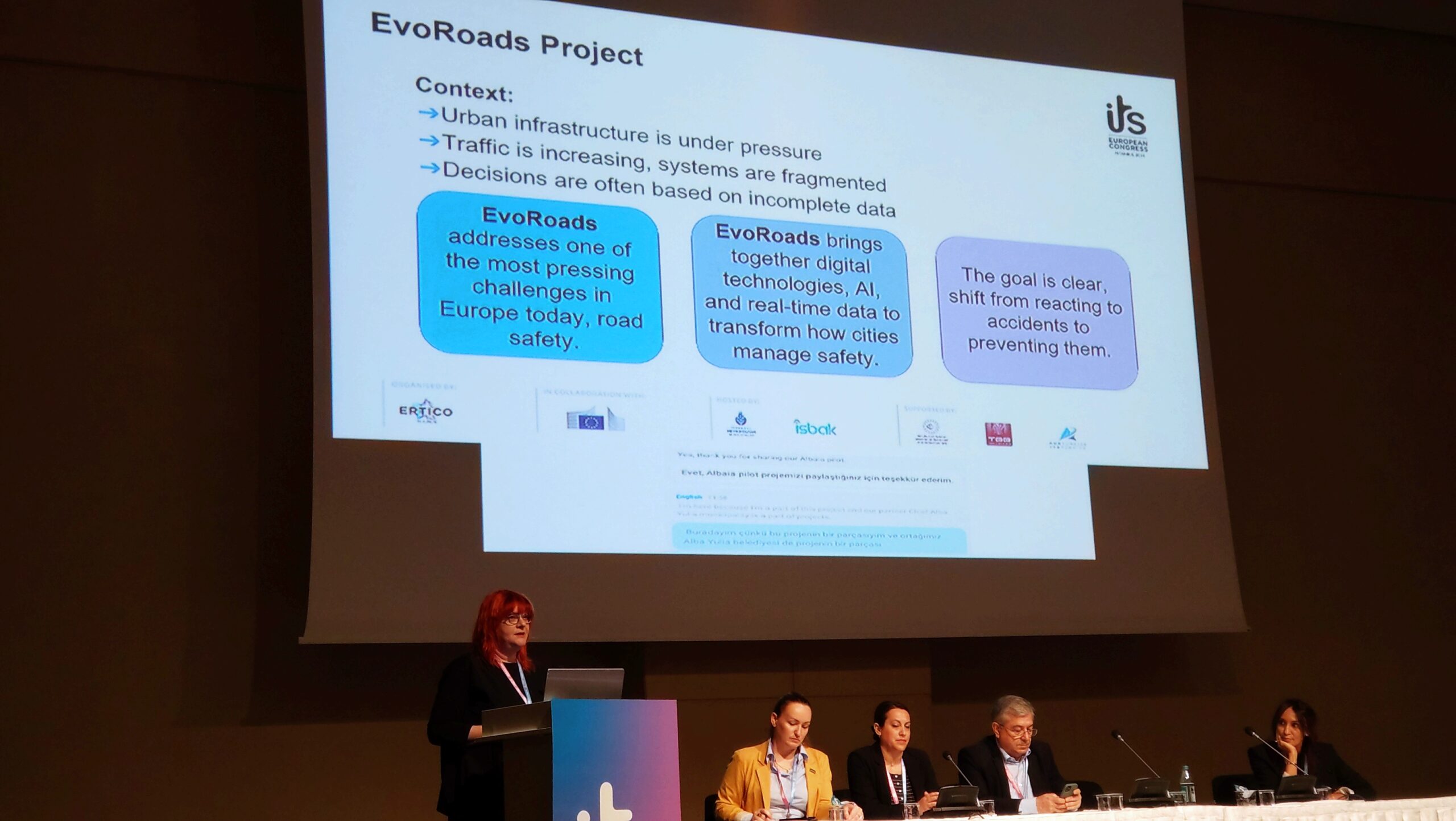
At the ITS European Congress 2026 in Istanbul, ERTICO brought together European expertise on one of the sector’s most pressing priorities: how to turn road safety innovation into practical, scalable policy. In the SIS60 session, “Data-Driven Road Intelligence: Redefining Safety and Asset Management in Urban and Rural Networks”, moderated by Maria Alonso Raposo (ERTICO – ITS), speakers examined how cities and road authorities can move from isolated pilots to sustained, data-driven action across urban, secondary and rural networks.
The discussion was grounded in a clear policy imperative. As highlighted during the session, Europe continues to face an unacceptable road safety burden, with around 19,400 deaths on EU roads and the shared objective of halving fatalities and serious injuries by 2030 and reaching near-zero fatalities by 2050. The session also underlined that more than 90% of fatal and serious crashes occur on urban and secondary roads, reinforcing the need to focus not only on major corridors, but also on the networks where people walk, cycle, ride and travel every day.
Maria framed the session around the growing role of predictive, data-driven infrastructure management. The contribution of ERTICO in this context is distinct: as a trusted European partner, we connect public authorities, industry, research and mobility stakeholders to align innovation with deployment needs. The session demonstrated that road safety now depends not only on new technologies such as AI, V2X connectivity and digital twins, but also on shared safety criteria, interoperable data frameworks and governance models that support implementation under real-world conditions.
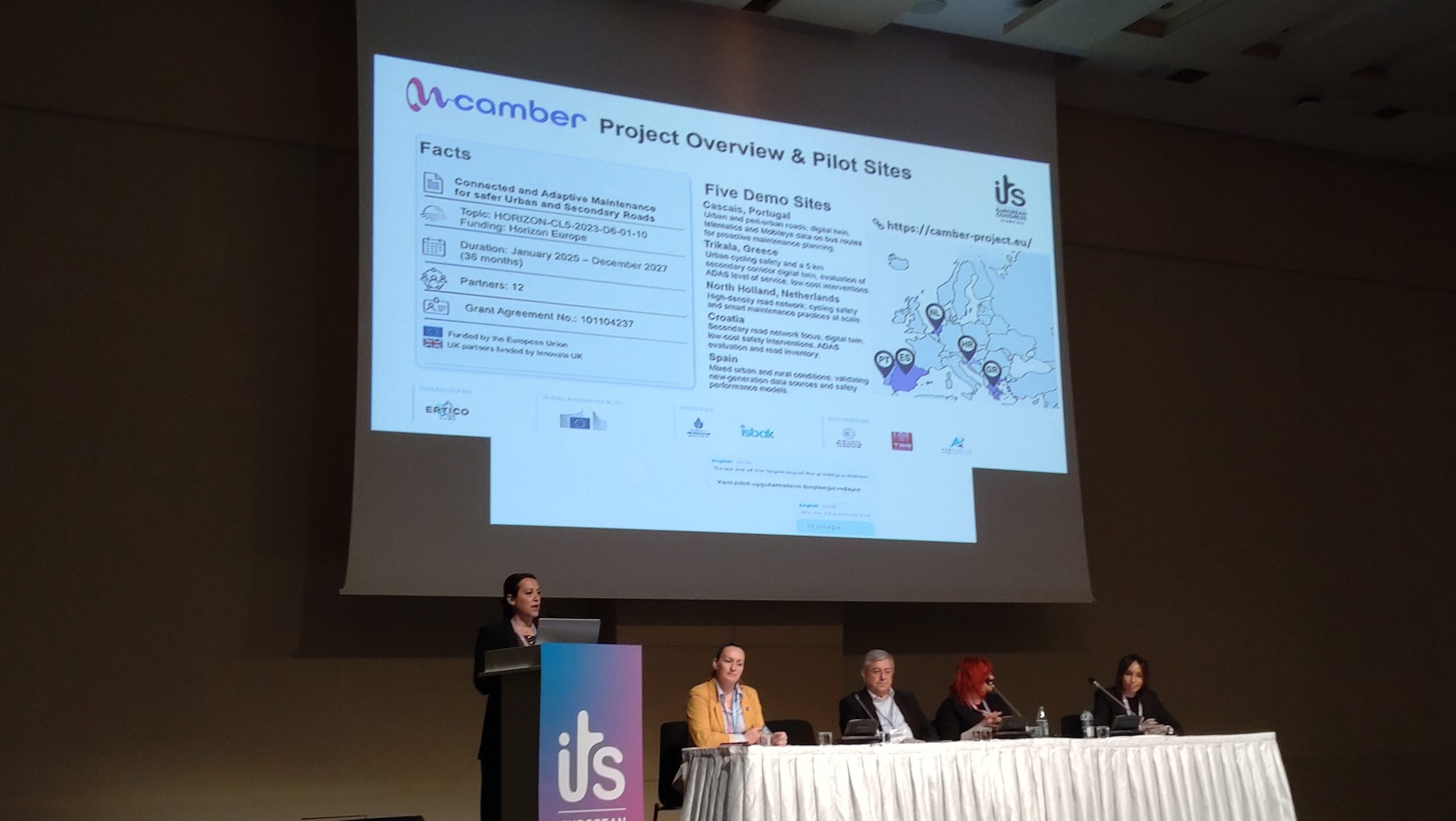
Particular attention was given to CAMBER, presented through the Trikala pilot in Greece. The project, funded under Horizon Europe, runs from January 2025 to December 2027, brings together 12 partners and is active across five demo sites: Cascais, Trikala, North Holland, Croatia and Spain. In Trikala, CAMBER is applying a practical combination of crowdsourced pavement intelligence, digital twin-based simulation and low-cost physical and digital interventions to improve safety for cyclists and other vulnerable road users. The pilot includes a 5 km secondary road corridor and urban cycle lanes, using cyclist-generated GPS, video and motion data to identify pavement defects and produce safety heatmaps aligned with the CycleRAP framework. This approach supports municipalities in prioritising maintenance, reducing hazard detection time and improving ADAS performance under different conditions.
The session also highlighted the contribution of EvoRoads, notably through the Alba Iulia pilot in Romania. Here, the focus is on integrating heterogeneous data sources, including citizen input, traffic monitoring, satellite and drone-based inspection, into a unified system supported by a digital twin. The objective is to improve real-time awareness, shorten response times and detect infrastructure degradation earlier. As presented, the Alba Iulia pilot shows how proactive safety management can be implemented in a live urban environment, while creating a model with relevance for other cities seeking practical, lower-fragmentation approaches.
Additional context from iDriving reinforced the wider ecosystem perspective. With 17 partners from 10 EU countries, a 36-month duration from July 2024 to June 2027 and EUR 4,998,733 in EU funding, the project is testing AI-enabled monitoring, digital twins and real-time alerts in Nevers, France. Its work on behavioural indicators, infrastructure hazards and coordinated warnings complements the infrastructure assessment and maintenance priorities of EvoRoads and CAMBER.
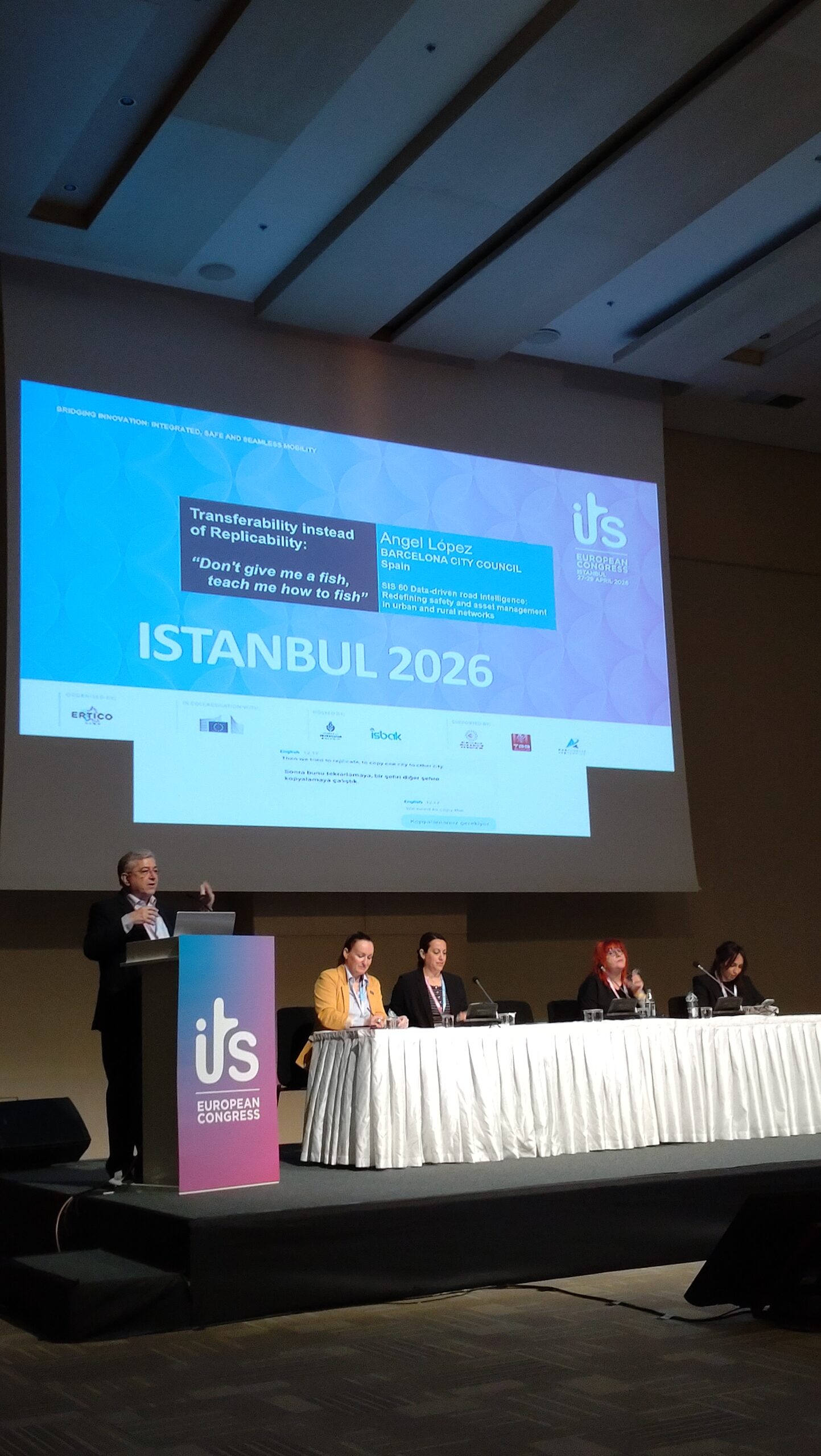
A strong concluding message came from the Barcelona perspective presented in the session: transferability matters more than replicability. For ERTICO and its partners, this means helping cities and road authorities understand not only what worked in a pilot, but how to apply the underlying policy models, safety KPIs and decision frameworks in their own context. That is where collaborative European platforms remain essential: they support alignment, reduce fragmentation and help innovation deliver measurable public value